Headphones In, Algorithms Out: Why Audio Drama Is Quietly Becoming the Coolest Room in Entertainment
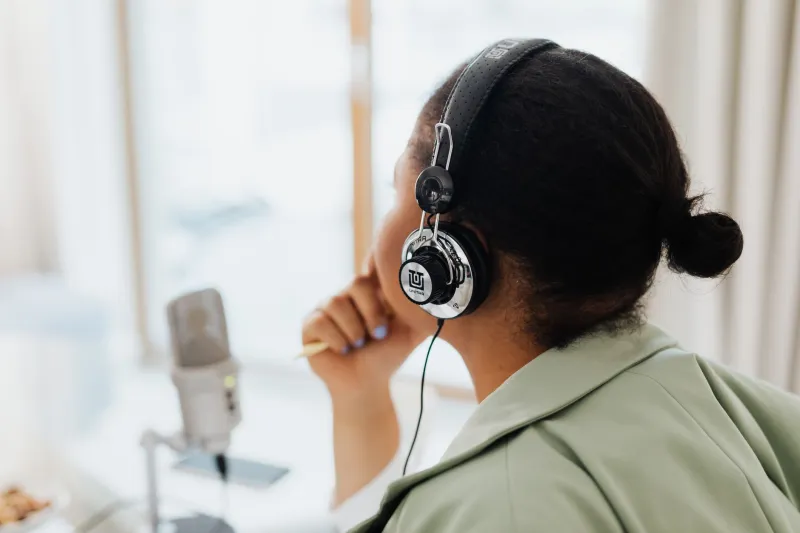
Picture the current state of prestige entertainment. A streaming platform greenlights a show, spends nine months debating the thumbnail color, releases it on a Friday, and cancels it six weeks later because the completion rate data didn't hit a benchmark. Meanwhile, somewhere in a recording booth in Brooklyn or a home studio in Austin, a writer with a microphone and a sound design budget that wouldn't cover a streaming show's catering is making something that people are listening to obsessively, episode after episode, telling everyone they know.
That contrast is not an accident. It's a signal.
The Medium Nobody Thought Would Survive Is Thriving
Podcasting has been declared dead, irrelevant, oversaturated, and over-hyped so many times that the people actually working in it have basically stopped paying attention to the discourse. And while critics were busy writing its obituary, audio drama specifically — scripted, narrative, produced storytelling in audio form — quietly developed into one of the most creatively fertile spaces in American entertainment.
The numbers back this up. Podcast listenership in the US has grown consistently every year for nearly a decade. More importantly, the type of listening has evolved. People aren't just tuning into true crime or celebrity chat shows anymore. They're following serialized audio dramas with the same intensity they once reserved for prestige TV. They're joining fan communities, theorizing about plot twists, and waiting for new episodes with genuine anticipation.
That's audience behavior that most streaming platforms would kill to replicate.
Why Serious Talent Is Taking the Headphone Leap
Something interesting started happening a few years ago. Writers, actors, and directors with legitimate industry credentials began showing up in podcast credits. Not as a side project or a favor to a friend — but as a deliberate choice. A primary creative investment.
The reasons vary, but a few themes come up consistently when you talk to people working in the space.
First, creative control. In audio drama, the writer is almost always the most powerful person in the room. There's no studio note machine grinding the edges off every idea. There's no committee deciding whether the ending is too ambiguous for a general audience. The story you write is much closer to the story that gets made.
Second, the audience relationship is different. Podcast listeners choose what they listen to in a way that streaming viewers increasingly don't. When an algorithm decides what you watch next, the emotional connection to that content is different — more passive, less invested. Podcast listeners seek out their shows. They subscribe. They follow creators. That relationship is closer to what a devoted readership feels like than what a streaming subscriber feels like.
Third — and this one matters more than people give it credit for — there's no cancellation cliff to fall off of. A streaming show lives or dies by first-week metrics. An audio drama can build its audience slowly, word of mouth, over months, without a platform pulling the plug because the algorithm flagged it as underperforming.
The Experimental Stuff Actually Gets Made
One of the most underappreciated things about audio drama right now is what it's doing for experimental storytelling formats that traditional platforms simply won't touch.
Parallel narratives that unfold across multiple feeds. Stories told entirely through voicemail and phone messages. Non-linear structures that reward listeners who've been following since episode one. Unreliable narrators deployed in ways that only work in audio. Horror that leans into the intimacy of headphones in a way a screen can never quite replicate.
This stuff is getting made. It's finding audiences. And it's doing it without a greenlight from a platform whose primary creative metric is whether the show will keep subscribers from canceling.
That's genuinely exciting, and it's something the broader entertainment world hasn't fully reckoned with yet.
The Investment Is Starting to Follow the Talent
It was only a matter of time before money noticed what was happening creatively. Audio drama is now attracting real production investment — not just from podcast networks, but from entertainment companies that see the medium as both a creative space and an IP incubator.
Several audio dramas have already made the jump to screen adaptations. More are in development. The pipeline flows in both directions now: a podcast can become a TV show, but a TV show's creative team might also choose audio as the place to take more risks.
For listeners, this creates an interesting dynamic. Getting into an audio drama early — before it becomes something else — has a certain cultural cachet to it. It's the entertainment equivalent of saying you listened to a band before they blew up. That's not nothing. Audiences like feeling like they discovered something.
The Algorithm-Free Zone Can't Last Forever — But Enjoy It While It Does
Here's the honest caveat: the thing that makes audio drama feel so fresh right now is partly just that the major algorithmic platforms haven't fully colonized it yet. Spotify has made moves in this direction. Apple is paying attention. The money following the talent will eventually bring the infrastructure — and the optimization — that comes with it.
But right now, in this particular moment, audio drama occupies a genuinely rare position in American entertainment. It's a space where creative decisions are still mostly made by creators, where audiences still mostly find things through genuine recommendation rather than a homepage module, and where the work itself still has room to be weird and ambitious and unfinished in productive ways.
That's not a small thing. In the current entertainment landscape, it might actually be the most valuable real estate around.
Put your headphones in. Something good is happening in there.