Your Bedroom Is Now a Backlot: How Remote Auditions Cracked Open Hollywood's Closed Doors
For most of Hollywood's history, getting seen meant getting there first. You needed the right agent, the right address, and ideally a cousin who worked at CAA. The audition process was less about talent and more about proximity — geographic, social, financial. Then a global pandemic hit, everyone got sent home, and casting directors discovered something kind of wild: you could hold auditions on Zoom.
What started as a logistical workaround has quietly turned into one of the more meaningful structural shifts the industry has seen in decades. And depending on who you ask, it's either the most democratic thing to happen to Hollywood in a generation — or just a shinier version of the same old machine.
The Old Way Was a Full-Time Job
Ask any working actor who came up before 2020 and they'll tell you: auditioning used to cost money. A lot of it. You'd fly to Los Angeles or New York, pay for a hotel, grab a headshot session, and maybe — maybe — get five minutes in a room with someone who'd already made up their mind before you opened your mouth. Actors from the Midwest, the South, rural areas, or anywhere outside the coasts were effectively priced out of the process unless they were willing to relocate entirely.
That system didn't just favor people with money. It favored people who looked like they belonged in those rooms. It favored people whose agents had relationships with certain casting offices. It was, to put it plainly, a closed loop.
"I grew up in rural Tennessee," one actor told us. "Before virtual auditions, I had no realistic path to even being seen for anything above a regional commercial. Now I've taped for network pilots from my living room. That's not nothing."
Zoom Changed the Math
When casting went remote, the immediate concern was quality — would self-tapes and video calls produce the same read on a performer that an in-person audition would? Casting directors were skeptical. Some still are. But what nobody anticipated was the volume and variety of talent that would suddenly flood in from places the industry had largely ignored.
Casting offices started receiving submissions from actors in Ohio, Montana, rural Georgia, and smaller cities that had never really been on anyone's radar. The talent was there all along. The access wasn't.
For roles that didn't require an immediate callback in person, virtual auditions became the default — and that default quietly reshuffled the deck. Actors who couldn't afford to live in LA or New York were suddenly competing on the same digital stage as people who'd been grinding the traditional circuit for years.
"We started seeing performers we genuinely would never have encountered otherwise," said one casting associate who works primarily in television. "Not because they weren't good enough before — because the system just wasn't built to find them."
But Let's Not Get Too Excited
Here's where it gets complicated. Virtual auditions didn't erase inequality — they relocated it.
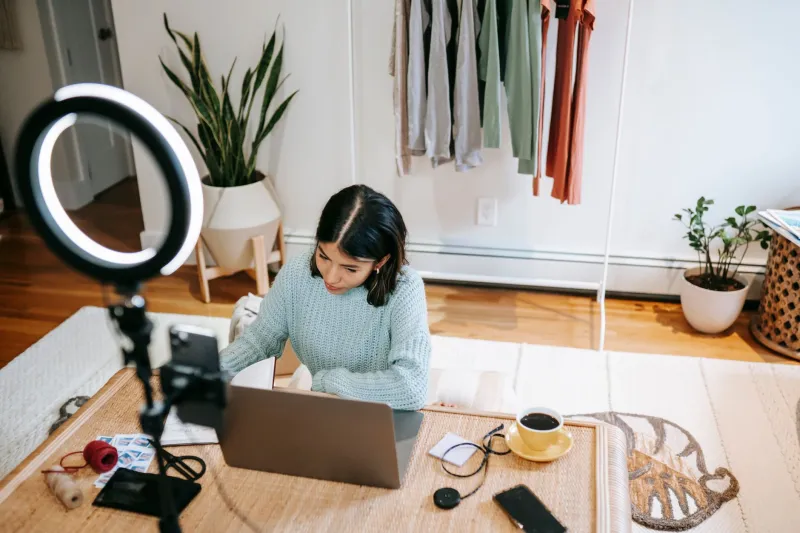
A self-tape submitted from a well-lit home studio with professional audio equipment reads completely differently than one recorded on a phone in a cramped apartment with street noise bleeding through the walls. Actors who could afford ring lights, decent cameras, and proper backdrops had a visible edge over those who couldn't. The gatekeeping didn't disappear; it just got rebranded as "production quality."
There's also the coaching industry that exploded alongside virtual auditions. A whole ecosystem of self-tape coaches, online acting classes, and remote reader services emerged — and while some are genuinely affordable, the premium options are expensive. Actors who could invest in that infrastructure had better outcomes. Sound familiar?
Agents noticed the shift too. Some smaller talent agencies that represent actors in non-coastal markets saw a bump in their clients getting seen for bigger projects. But the major agencies still control access to the biggest breakdowns. Virtual auditions changed the first step of the funnel, not the whole pipeline.
The Authenticity Question
There's another wrinkle that doesn't get talked about enough: what gets lost when you move the audition into someone's living room?
Some casting directors argue that in-person reads reveal things a video call simply can't — physical presence, energy in a room, how an actor responds to direction in real time. Chemistry reads, in particular, are notoriously hard to replicate over a screen. For certain projects, that matters enormously.
"There are roles where I need to see how someone fills a space," one casting director explained. "A Zoom call tells me a lot, but it doesn't tell me everything. For leads, for ensemble work — sometimes you just need people in the room."
The industry has largely landed on a hybrid model as a result. Initial rounds happen virtually, callbacks go in-person for serious contenders. Which means the financial burden hasn't completely vanished — it's just been pushed further down the process, to a point where fewer actors have to absorb it.
Is This the New Normal?
Four-plus years after the pandemic forced everyone onto video calls, virtual auditions aren't going away. They're too efficient, too cost-effective for studios and networks, and genuinely too useful for discovering talent outside traditional hubs. But they're also not the revolution some hoped for.
What they've done is crack a door that was previously bolted shut. Actors who never would have gotten a first look are now getting first looks. Some of them are booking jobs. Some of those jobs are significant. That's real progress, even if the system around it is still very much the same industry it always was.
The casting couch, as the saying goes, got a Zoom link. Whether that's a transformation or just a renovation is still being figured out — one self-tape at a time.