Swipe Right for a Role: How AI Audition Tools Are Rewriting Hollywood's Oldest Power Play
For as long as Hollywood has existed, the path to a role has run through people — specific, powerful, often very difficult-to-reach people. Agents, casting directors, producers with corner offices and strong opinions. Getting in front of those people required either a connection, a lucky break, or the kind of relentless hustle that most working-class actors simply couldn't sustain while also paying rent in Los Angeles.
That system is cracking. Not collapsing — cracking. And the thing doing the cracking is artificial intelligence.
What These Platforms Actually Do
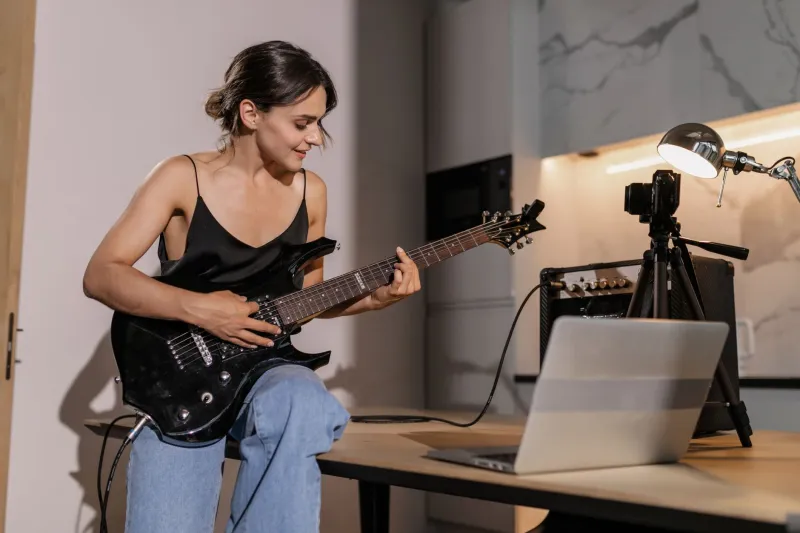
AI audition tools aren't science fiction anymore. Platforms like Casting Networks, Backstage's AI features, and a growing number of studio-internal tools now allow actors to submit self-tape auditions that get analyzed before a human ever watches them. The software evaluates everything from line delivery and emotional range to facial symmetry, vocal clarity, and how well a performer's look matches a described character profile.
Some tools go further. They cross-reference a performer's submission against a library of successful performances in similar roles, essentially scoring the audition against a template of what's worked before. Others use natural language processing to assess script comprehension — whether an actor's choices suggest they actually understood what the scene was asking for.
For studios drowning in thousands of submissions for a single supporting role, this is genuinely useful. The volume problem in casting is real, and AI creates a first-pass filter that saves weeks of work.
But here's where it gets complicated.
The Promise: A Wider Door
The most optimistic case for AI casting tools is a compelling one. If an algorithm is screening submissions rather than a human assistant in a West Hollywood office, then geography stops being a dealbreaker. An actor in Memphis, Tennessee — or Boise, Idaho — theoretically has the same shot as someone who's been grinding the LA audition circuit for five years.
For actors from underrepresented backgrounds, the appeal is obvious. Traditional casting has long been shaped by informal networks, industry relationships, and frankly, who a casting director personally finds relatable. An algorithm, the argument goes, doesn't care who your agent is or whether you went to the right acting conservatory.
Some smaller productions and streaming platforms have already leaned into this. There are documented cases of actors getting their first significant roles after being flagged by an AI tool that a human reviewer might have skipped over. That's not nothing. That's actually kind of remarkable.
The Problem: Bias Doesn't Disappear. It Just Gets Automated.
Here's the part the press releases don't lead with: AI systems learn from historical data. And the historical data of Hollywood casting is not exactly a beacon of equity.
If you train a model on decades of successful films and TV shows, you're training it on a dataset where certain faces, body types, skin tones, and accents were systematically favored. The algorithm doesn't know it's perpetuating those patterns — it's just doing math. But the output reflects the inputs, and the inputs were biased to begin with.
Researchers studying AI in hiring contexts more broadly have found that facial analysis tools can perform significantly worse on darker-skinned faces, and that vocal analysis tools sometimes flag non-native English accents as markers of lower "clarity" scores — even when the performance is objectively strong. There's no reason to assume entertainment-specific tools are immune to these problems.
And then there's the creativity question. Acting, at its best, is surprising. It's the choice nobody expected that makes a scene land. Training an AI to recognize "successful" performances and then using that to filter new talent risks creating a self-fulfilling cycle where only safe, familiar interpretations get through the gate.
What the Industry Insiders Are Saying (Carefully)
Most casting directors who use these tools are reluctant to talk about them on the record, which tells you something. The ones who do speak up tend to frame AI as a "first look" tool rather than a decision-maker — something that surfaces options a human then evaluates.
That framing matters. There's a meaningful difference between an algorithm that helps you find needles in a haystack and one that's actually deciding who gets the callback. The concern from actors' unions, including SAG-AFTRA, is that the line between those two things is already blurring — and that studios have financial incentives to let it blur further.
SAG-AFTRA's ongoing negotiations around AI protections aren't just about digital likenesses and voice cloning. They're increasingly about the casting process itself, and who — or what — gets to make those calls.
The Actor's Experience on the Other End
Talk to working actors about submitting to AI-screened auditions and you get a mix of pragmatic acceptance and low-grade unease. Many appreciate the accessibility — not having to drive across town for a five-minute in-person read, not needing a specific agent to get a submission in front of the right people.
But there's also a strange alienation to performing for software. You're calibrating your choices not for a human in the room but for a system you can't read, can't charm, and can't have a conversation with. Some actors describe it as performing into a void. Others say it's actually liberating — no politics, no small talk, just the work.
The truth is probably somewhere in between, which is where most of the honest conversations about AI in entertainment tend to land.
So Is This Progress?
Yeah, maybe. Partially. With serious caveats.
AI audition tools have genuine potential to widen who gets seen — but only if the people building and deploying them are actively working to audit for bias, involve diverse stakeholders in the design process, and keep humans meaningfully in the loop for creative decisions. That's a lot of "ifs."
What's clear is that the old system — built on access, geography, and who you knew — wasn't working for most people either. The question isn't whether AI is perfect. It isn't. The question is whether it can be made fairer than what it's replacing, and whether the industry has the will to do that work.
Given Hollywood's track record, don't hold your breath. But don't write it off entirely either. The door is at least theoretically wider than it was. What matters now is making sure the algorithm doesn't slam it shut in ways we haven't noticed yet.