Blockbuster Burnout: The Moment Studios Realized Their Golden Franchises Had Nothing Left to Say
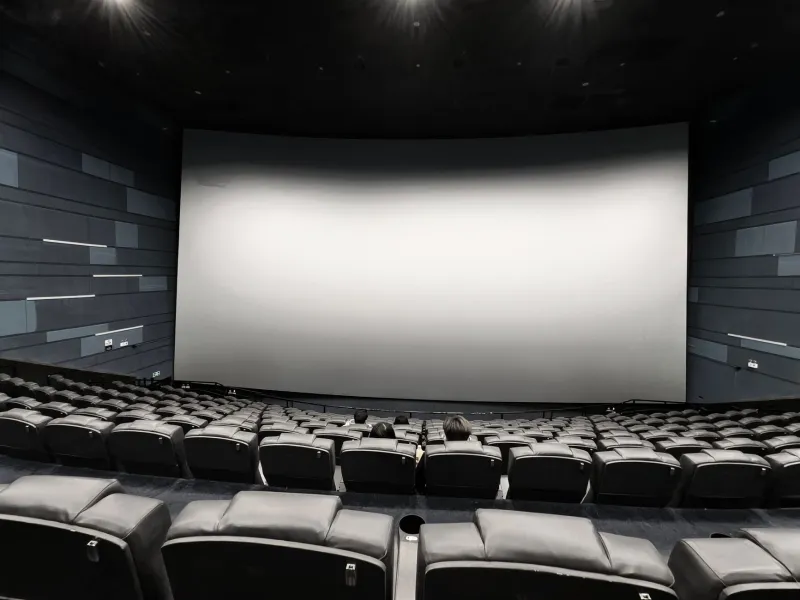
There's a moment in every long-running franchise when the magic just... stops. You're sitting in the theater, popcorn going stale in your lap, watching a character you once genuinely loved do something that feels completely hollow — and you realize you're not excited anymore. You're just there out of habit.
That feeling? It turns out the studios are starting to feel it too.
Hollywood spent the better part of two decades betting everything on franchise filmmaking. The logic was simple and, for a while, it worked beautifully: build a beloved IP, spin it into a multi-film arc, add a streaming series or two, license the merchandise, and watch the money roll in indefinitely. But "indefinitely" turned out to have an expiration date, and a lot of those dates are coming up fast.
The Math Stopped Making Sense
Let's talk money, because that's really what this is about.
For a long time, sequels were considered the safest bet in the movie business. A built-in audience, name recognition, and pre-sold marketing made the financial math look clean and reliable. But the calculus has shifted dramatically. Production budgets have ballooned to the point where even a "successful" sequel can barely break even once you factor in marketing, distribution, and theater splits.
Industry analysts have pointed out that several major franchise installments over the last few years — films that would've been considered hits by 2010 standards — are now being quietly classified as disappointments internally. The threshold for success has risen so high that studios are essentially running on a treadmill that keeps speeding up.
When a film costs $200 million to make and another $150 million to market globally, you need a massive worldwide gross just to see black ink. And audiences, especially domestic ones, aren't showing up with the same automaticity they once did.
Creative Teams Are Tapping Out
Beyond the spreadsheets, there's a very human problem at the center of franchise fatigue: the people making these movies are running dry.
Directors, writers, and producers who've spent years inside a single fictional universe often describe a creeping sense of creative claustrophobia. When every story decision has to pass through layers of brand management, continuity checks, and corporate alignment meetings, the actual storytelling tends to suffer. You end up with films that feel engineered rather than made — products rather than movies.
Several high-profile creative departures from major franchises in recent years weren't just salary disputes or scheduling conflicts. They were people walking away from creative dead ends. When a filmmaker tells a studio "I don't have another story to tell in this world," and the studio responds with "figure it out, we need a release date," the results tend to speak for themselves at the box office.
The audience can feel the difference between a story that needed to be told and one that needed to fill a quarterly slot.
The Quiet Shelving No One's Announcing
Here's something interesting: studios aren't exactly holding press conferences to announce that their franchises are done. Instead, there's a much quieter process happening — development deals that don't get renewed, sequels that stay in "early development" for years without movement, release dates that get pulled and never rescheduled.
It's a soft retirement. No funeral, no farewell tour. Just a slow fade.
Several franchises that were once treated as studio tentpoles are currently in this ambiguous limbo. Projects that were announced with fanfare have gone conspicuously silent. When journalists ask about them, the PR responses are carefully noncommittal — "we're still exploring options" is Hollywood-speak for "we're not sure this is worth the risk anymore."
For fans, this is genuinely frustrating. You'd almost rather have a definitive ending than just... nothing. But studios are reluctant to officially close the door on any IP that still has theoretical value, even if the practical appetite for more content has evaporated.
The Pivot Nobody Wanted to Make
So what happens when the sequel machine breaks down? Studios are being forced to do something they've actively avoided for years: develop original content.
This sounds like good news — and in some ways it is. Original ideas, fresh characters, stories that aren't beholden to forty years of established canon. But the transition is genuinely difficult for an industry that has spent so long optimizing for the familiar.
Green-lighting an original film is a fundamentally different kind of risk. There's no built-in audience, no merchandise pipeline primed and ready, no guaranteed opening weekend from loyal fans who'd show up regardless. Every element has to be sold from scratch, and in a market where streaming has conditioned audiences to sample content cautiously before committing, that's a tough sell.
Some studios are threading this needle by recycling IP in less obvious ways — taking older, less-exploited properties and reimagining them rather than starting completely fresh. It's not exactly original, but it's a step away from the pure sequel dependency that defined the last decade.
What This Means for the Moviegoing Experience
If Hollywood genuinely pivots — even partially — away from franchise dominance, the theatrical experience could look pretty different within the next five to ten years. The summer blockbuster calendar, which has been essentially a franchise parade for so long, might actually open up space for more varied, mid-budget films that aren't trying to set up three sequels and a Disney+ series.
That's a version of Hollywood a lot of people — critics, cinephiles, and honestly a growing chunk of general audiences — would actually welcome. The conversation around movies has been so franchise-dominated for so long that it's easy to forget how energizing a genuinely unexpected, original hit can be. When something breaks through without a prequel or a brand attached, it tends to remind everyone why they loved movies in the first place.
The tricky part is getting studios to trust that enough to actually fund it.
The Audience Sent the Memo
Ultimately, the real force driving this shift isn't creative exhaustion or studio strategy — it's the audience. Ticket buyers have been sending a clear signal for a few years now, and it's finally getting through: they're not showing up just because a number follows a title.
Franchise loyalty used to be almost unconditional. Now it's contingent. People want to know there's a real reason for a sequel to exist before they make the trip to the multiplex. The goodwill that once carried mediocre franchise entries to respectable grosses has largely burned off.
Studios spent years treating their franchises like they were too big to fail. The box office ledgers of the last few years have made a pretty compelling argument that nothing in entertainment is too big to fail — and that audiences have a lot more options for their time and money than they used to.
The great franchise era isn't over overnight. These things wind down slowly, and studios will keep squeezing whatever they can from properties that still show a pulse. But the era of unlimited sequels as the default business model? That particular ride is pulling into the station.
Whether what replaces it is actually better — that's the part nobody knows yet.