Pixels in the Spotlight: What Happens When Hollywood Replaces Actors With Code
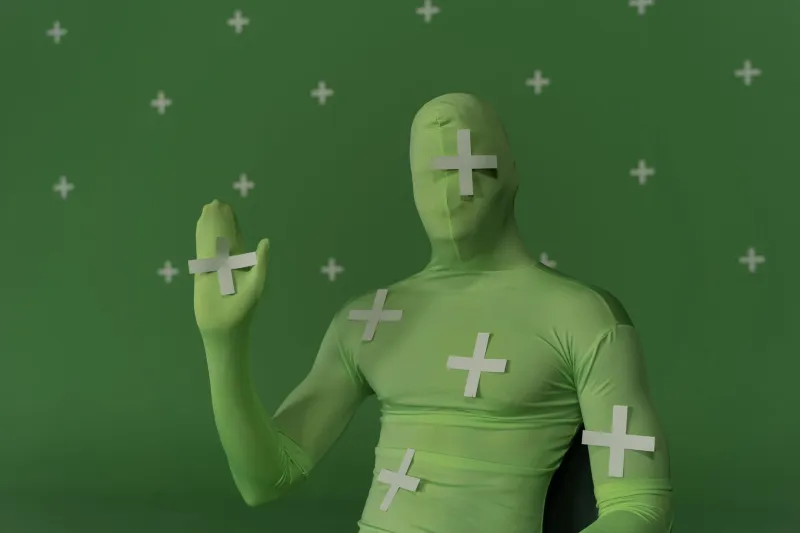
Hollywood has survived talkies, color film, CGI spectacles, and the streaming revolution. But the industry's latest experiment — one that involves generating actors from algorithms rather than auditioning them from headshots — feels different in a way that's hard to shake. It's not just a new tool. For a lot of people in the industry, it feels like a threat wearing a friendly face.
AI-generated actors and so-called "digital doubles" are no longer science fiction. They're showing up in real productions, real credits, and increasingly, real arguments about what it means to perform for a living.
What We're Actually Talking About
Let's be clear about the distinction here, because the conversation tends to get muddy fast. There's a spectrum of AI involvement in modern productions. On one end, you've got de-aging technology — the kind used to make Harrison Ford look forty again in Indiana Jones and the Dial of Destiny, or to bring a younger Luke Skywalker back to The Mandalorian. That's been controversial on its own, but it still involves a living actor at the center of it.
On the other end, you've got fully synthetic performers — digital humans built from scratch using generative AI tools, trained on vast datasets of human movement, facial expression, and voice. No living person required. No residuals. No craft services bill.
Several studios have quietly begun experimenting with that second category, particularly for background roles, minor characters, and what industry insiders sometimes call "filler talent" — the nameless faces that populate a crowd scene or a coffee shop background. Companies like Metaphysic, Synthesia, and a handful of others have been pitching their tools directly to production houses, promising faster turnaround and significantly lower costs.
For a below-the-line budget trying to stretch every dollar, that pitch is hard to ignore.
The Backlash Has a Name (And a Union Card)
If you were paying attention during the 2023 SAG-AFTRA strike, you already know this fight was coming. One of the central issues on the picket line wasn't just streaming residuals — it was the use of actors' likenesses without consent, and the broader question of whether studios could eventually sidestep human talent altogether.
The writers got their deal. The actors got theirs. But a lot of people in the industry will tell you the agreements were a starting point, not a finish line.
"What we negotiated protects us right now, in this moment," one background actor who worked on a major network drama told us, asking not to be named. "But technology doesn't stand still. Six months from now, two years from now — the tools are going to be better, cheaper, and harder to argue against in a budget meeting."
That anxiety is well-founded. The pace of improvement in generative AI video tools has been genuinely startling. What looked uncanny and obviously fake eighteen months ago is starting to look plausible. And plausible, in a crowd scene or a quick cutaway, might be good enough.
Where It's Already Happening
High-profile cases tend to grab the headlines, but the quieter use cases are arguably more significant. Advertising — not feature film — has been the proving ground for AI-generated human likenesses at scale. Brands have used synthetic spokespeople for campaigns in Asian markets for years, and that practice has been creeping into US advertising with increasing frequency.
In scripted entertainment, the most discussed recent example involved a streaming production that used an AI-generated digital double for a deceased performer, recreating their likeness for a brief scene with the family's permission. The result was technically impressive and emotionally complicated — a preview of ethical territory the industry hasn't fully mapped yet.
Video game productions have been even more aggressive. Several major game studios have begun casting AI-generated characters for non-player roles, bypassing voice actors entirely for minor dialogue. It's a smaller stage, but it's where the workflow is being refined.
The "It's Just a Tool" Argument
Proponents of AI casting tend to frame it the same way every new technology gets framed in Hollywood: it's just a tool, and tools don't replace artists, they change what artists do. The cinematographer didn't disappear when digital cameras replaced film. Editors didn't vanish when Avid replaced the flatbed.
There's something to that argument. AI tools used ethically — to enhance a production, fill genuinely minor gaps, or assist with tasks that don't require human creative input — aren't inherently destructive. A crowd of five hundred digital extras in a stadium shot is a different conversation than replacing a speaking role with a synthetic performer.
But the "just a tool" framing also has a way of glossing over the economic reality. When a tool is cheaper and faster than a human, market pressure tends to expand its use well beyond its original justification. That's not pessimism — it's just how production budgets work.
What the Talent Is Saying
Beyond the union politics, individual performers are navigating this shift in very personal ways. Some established stars have leaned into it, licensing their likenesses for AI use and pocketing fees for appearances they never had to physically make. Others have taken a hard line, adding explicit language to their contracts prohibiting AI use of their image.
Mid-tier and emerging actors — the ones who can't command that kind of contract leverage — are in a harder spot. For them, the concern isn't that AI will replace their starring roles. It's that it will chip away at the supporting work, the background work, the day-player gigs that keep a career financially viable while they build toward something bigger.
"People think acting is just the famous part," says one working actor with credits on several streaming series. "But there's this whole ecosystem of smaller work that makes the industry function. That's what's actually at risk."
Where This Goes From Here
Predicting the trajectory of any fast-moving technology is a fool's game, but a few things seem reasonably clear. Regulation is coming — California has already moved toward legislation requiring consent for AI use of a performer's likeness, and federal-level conversations are happening with increasing seriousness. Unions will continue to negotiate harder AI provisions into every new contract cycle.
At the same time, the technology isn't going away. The studios that are experimenting will keep experimenting, because the economic incentive is real and the tools are only getting better.
The most likely outcome isn't a clean victory for either side — it's a messy negotiated reality where AI handles certain categories of work, human performers retain protections for others, and the line between the two stays contested for years.
Hollywood has always been in the business of illusion. The question now is whether the illusion can be made without the humans who used to create it — and whether audiences will actually care either way.