Is Comedy Scared of Itself? The Uncomfortable Truth About Jokes in 2024
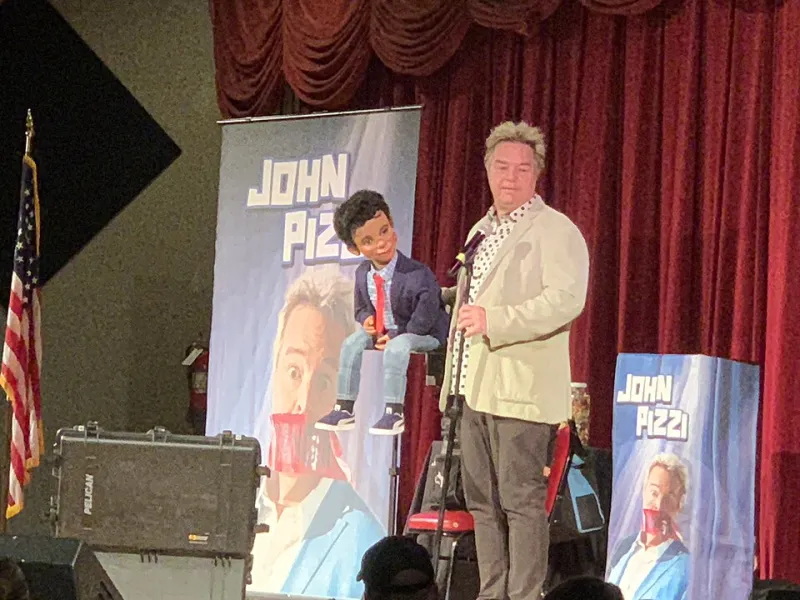
Photo: Jason Ingtonn, CC BY-SA 4.0, via Wikimedia Commons
There's a bit that every comedian seems to have right now. It goes something like this: "I can't say anything anymore." The crowd laughs. The comedian shrugs knowingly. And for a few seconds, the meta-joke about not being able to make jokes is the joke. It's clever the first time. By the hundredth time, it's become its own kind of lazy.
But underneath that bit — underneath the eye rolls and the "back in my day" energy — is a genuinely complicated question that the entertainment world is wrestling with right now: Has the cultural conversation around sensitivity actually made comedy worse? Or is it just forcing comedians to be better?
The Controversy Industrial Machine
Let's start with the elephant in the room, which is that controversy sells. Dave Chappelle's The Closer special on Netflix became one of the most talked-about comedy events in recent memory — not primarily because of the jokes, but because of the backlash to the jokes. Netflix's own employees protested. Trans advocacy groups organized. Think pieces multiplied. And the special got watched by millions of people who might never have clicked on a stand-up special otherwise.
That's not a coincidence. Ricky Gervais's SuperNature followed a similar arc. So did specials from Bill Burr, and to a lesser extent, virtually every major comedian who drops a Netflix hour these days. The controversy isn't a side effect of the comedy anymore — for some of these specials, it feels like it might be the actual marketing strategy.
When backlash guarantees attention, the incentives get weird. A comedian willing to court outrage isn't necessarily being brave. They might just be very good at understanding algorithms.
The Self-Censorship Question
Here's where it gets more nuanced, though. While the A-listers with massive platforms and Netflix deals can afford to lean into controversy (or at least absorb it), working comedians — the ones grinding through club circuits in Chicago, Austin, and New York — describe a different experience.
Many mid-level and emerging comedians talk about an internal filter that didn't used to exist. Not a legal filter, not a network standards-and-practices filter, but a social one. A sense of "is this worth the headache?" before even testing a bit in front of a live audience. That kind of preemptive self-editing is harder to measure than a Twitter pile-on, but it may be the more significant creative force at work.
The irony is that stand-up comedy, historically, has been one of the few art forms where you could say things that couldn't be said anywhere else. Richard Pryor talked about race in America in the 1970s in ways that mainstream media wouldn't touch. George Carlin dissected American hypocrisy for decades. Joan Rivers went places that polite society refused to acknowledge. The whole point was that comedy existed slightly outside the rules.
If comedians are now writing with the assumption that any given joke might end up as a screenshot divorced from context, something has genuinely changed about that creative space.
But Is the Comedy Actually Worse?
This is where the "comedy is dying" crowd tends to lose the argument. Because if you actually look at the current landscape — like, really look at it — there is an extraordinary amount of genuinely funny, sharp, culturally alive comedy happening right now.
Nicole Byer, Wanda Sykes, Hasan Minhaj, Quinta Brunson, Sam Jay, John Mulaney (controversies and all), Taylor Tomlinson — the list of compelling comedic voices working right now is long. And a significant number of them are making comedy that's about navigating modern identity and culture, not despite it.
The argument that sensitivity killed comedy tends to come with an unstated assumption: that the comedy being "protected" was good comedy. But a lot of what's getting called out wasn't transgressive genius — it was just punching down with a microphone. There's a difference between a joke that makes you uncomfortable because it's saying something true and a joke that makes someone uncomfortable because it treats their existence as a punchline.
That distinction matters. And comedy has always evolved based on who gets to be in the room and who gets to hold the mic.
The Audience Has Changed Too
Something that doesn't get enough credit in these conversations: audiences are different now. Not worse, not more fragile — just different. A generation of comedy fans grew up watching Hannah Gadsby's Nanette, which deliberately interrogated the structure of stand-up itself. They grew up watching Bo Burnham make comedy specials that were also genuine artistic statements about anxiety and performance. They're not necessarily looking for the same thing their parents wanted from a comedy special.
The idea that there's one monolithic "audience" that either wants edgy material or doesn't is a fiction. Some people want Dave Chappelle. Some people want Tig Notaro. Some people want both on different nights. The streaming era, whatever its financial sins, has actually made room for more variety in comedy than the old TV landscape ever did.
Controversy as a Crutch
The thing worth pushing back on — genuinely — is when controversy becomes a substitute for craft. When the "I can't say anything" bit is the whole act. When a comedian's entire identity becomes "I'm the one who says the things you're not allowed to say" without the actual comedic architecture to back it up.
Shock has always been a tool in comedy. But it's supposed to be a tool in service of something — a truth, an observation, a moment of recognition. When the shock is the point, you're not really doing comedy anymore. You're doing performance outrage for an audience that came to feel validated, which is, weirdly, exactly what comedians accuse their critics of doing.
So Where Does That Leave Us?
Honestly? In a more interesting place than the "comedy is dead" crowd wants to admit, and a more complicated place than the "everything is fine, lighten up" crowd is comfortable acknowledging.
Comedy is negotiating something real right now. The rules of what's acceptable are genuinely shifting, the audience is more fragmented and vocal than ever, and the tools of accountability — Twitter, YouTube clips, podcast callouts — have real teeth. That creates friction.
But friction has always been where comedy lives. The best comedians aren't the ones who ignore the conversation — they're the ones who walk into it with something worth saying.
The mic is still on. The question is just who's brave enough to use it well.