They Didn't Wait for a Label to Call: How a New Wave of Artists Built Empires Before the Industry Noticed
Not long ago, making it in music had a pretty standard roadmap. Play local venues. Get a demo together. Find a manager who knew someone who knew someone at a label. Wait. Hope. Repeat. The gatekeepers were few, the doors were narrow, and the line was very, very long.
That roadmap is being shredded in real time.
A generation of musicians figured out that if you could build an audience of a few hundred thousand people who genuinely loved your music, the labels would eventually come find you. And they were right.
The Cover-to-Original Pipeline
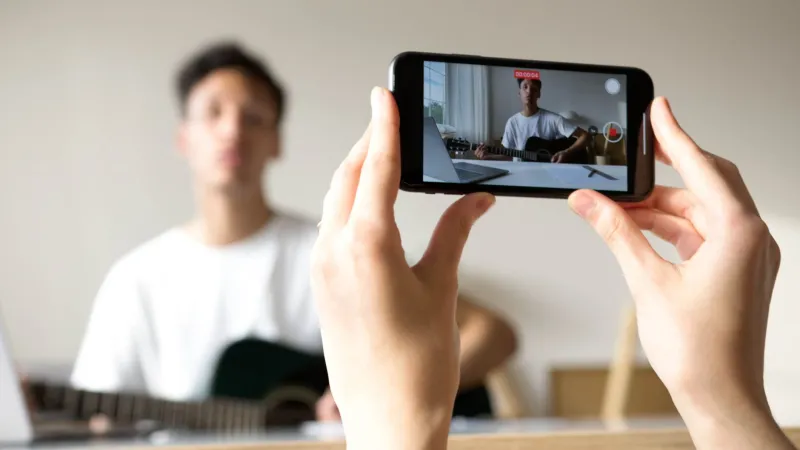
For a lot of artists who broke through social media, the path started with covers. YouTube, in particular, became a proving ground where musicians could demonstrate vocal range, arrangement instincts, and personality — all the things A&R scouts used to evaluate in tiny clubs — to a potentially global audience.
Olivia Rodrigo was writing and performing before her Disney+ exposure, but her raw emotional authenticity had already been cultivated through years of building a following who felt like they knew her. Conan Gray posted bedroom pop recordings to YouTube for years before Interscope came calling. Surfaces, the duo behind "Sunday Best," built a streaming fanbase through consistent lo-fi uploads before landing label support.
The pattern is consistent: artists use social platforms not just for exposure but as a genuine creative laboratory, iterating in public, responding to what resonates, and developing a voice that's already market-tested before a label exec ever hears the pitch.
TikTok Changed the Specific Gravity of Everything
If YouTube was the first major disruption to the label pipeline, TikTok was the earthquake. The platform's algorithm doesn't care how many followers you have — a first-time poster with a genuinely compelling 30-second clip can reach millions overnight. That structural feature completely rewired how artists think about releasing music.
Instead of a carefully managed album rollout with label support, artists began dropping snippets, testing hooks, watching which moments made people stop scrolling. The ones that worked became singles. The singles that went viral attracted labels. And suddenly, artists who had never played a club outside their hometown were fielding calls from major labels based on a sound that had never been properly recorded.
"The demo used to be something you made in a studio and sent to labels," says one music industry consultant who works with emerging artists. "Now the demo is your TikTok page. Labels can see exactly how people respond to your music in real time. That's actually incredibly useful for them — but it also means the artist has already proven the value before any deal is signed."
What This Does to Negotiating Power
Here's the part the industry doesn't love to talk about: when an artist comes to the table with 800,000 TikTok followers and a song that's already been used in 200,000 user videos, they negotiate from a fundamentally different position than an unknown act begging for a development deal.
They have leverage. Real leverage. The kind that translates into better royalty splits, more creative control, and shorter contract terms. Labels still bring resources — marketing infrastructure, radio promotion, international distribution — but the power balance has genuinely shifted.
This is why you've seen so many artists in the last five years sign deals that would have been unthinkable a decade ago. Publishing rights retained. Co-ownership of masters. Shorter exclusivity windows. The artists who built their own audiences first came to the table knowing their worth, and the labels, hungry for acts with proven audiences, had to meet them closer to halfway.
The Scramble Inside the Labels
For their part, the major labels have not exactly been sitting still. A&R departments now employ social media analysts. Algorithms scan TikTok for songs gaining unusual traction. Some labels have created dedicated teams whose only job is to monitor emerging creators across platforms before they blow up.
The irony is rich: the industry that spent decades controlling access to audiences now pays people full-time salaries to scroll for talent that audiences already discovered on their own.
Some labels have adapted better than others. Republic, Atlantic, and Columbia have all signed acts with significant social followings in the last few years and found ways to amplify rather than replace what made those artists resonate. Others have struggled — signing social media artists and then trying to mold them into traditional pop acts, stripping away exactly the raw authenticity that made their audiences love them in the first place.
"The worst thing a label can do is sign someone with a loyal DIY following and then immediately make them sound like everyone else on the radio," says one independent manager. "The fans notice. They always notice."
The Artists Who Never Needed Them at All
And then there's the category that keeps label executives up at night: artists who built sustainable careers without signing to a major label at all.
The Weeknd famously dropped three mixtapes on Tumblr and built a cult following before Republic Records came into the picture. But more recently, artists like Russ and NF have built massive, dedicated fanbases operating largely independently, using direct-to-fan models that bypass traditional industry infrastructure almost entirely.
For these artists, the platform itself is the label. Distribution is handled through services like DistroKid or TuneCore. Merchandise is sold directly. Touring revenue goes to the artist. It's not a path that works for everyone — it requires entrepreneurial hustle that not every musician has or wants — but it proves the model is viable.
Where This Leaves the Industry
The music industry isn't going anywhere. The infrastructure labels provide — particularly at the level of global tours, major media campaigns, and sync licensing — still matters. But the era when a label could make or break a career simply by deciding whether to sign someone is genuinely over.
The gatekeepers didn't disappear. They just got outflanked.
And for a generation of artists who grew up watching their favorites grind on YouTube and blow up on TikTok, the message is pretty clear: don't wait for someone to open the door. Build your own house first.