Too Many Passwords, Too Little Patience: The Streaming Login Nightmare Getting Worse

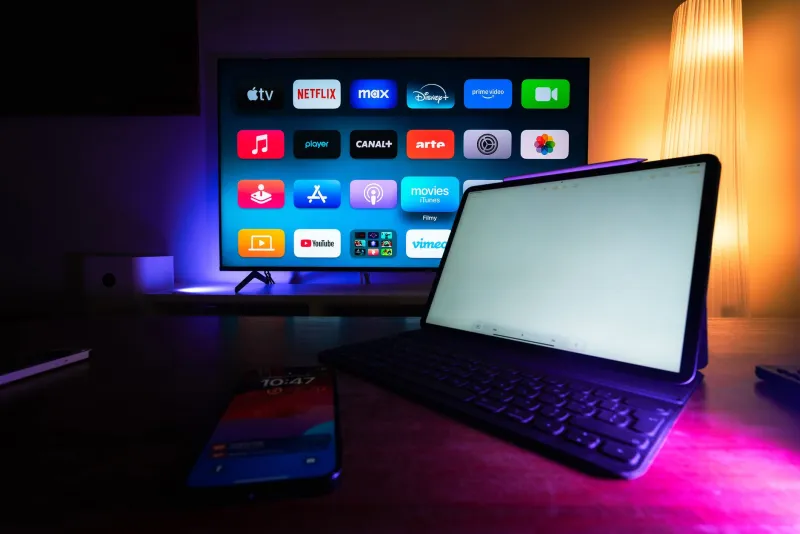
Photo: frustrated person multiple streaming apps phone laptop password, via img.freepik.com
Let's set the scene. It's Friday night. You want to watch that show everyone at work keeps referencing. You open the app, tap "Sign In," and then — nothing. You can't remember the email you used. Was it your Gmail? The old Yahoo one? Did your ex set this account up back in 2021? You try three passwords, get locked out, and by the time you reset everything, you've lost the mood entirely and you're eating cereal watching whatever was already on.
This is the reality of streaming in 2025, and somehow, the industry is making it worse.
How We Got Here
Remember when "watching TV" meant turning on the television? One remote, one cable box, one bill. The rise of streaming was supposed to simplify things — cut the cord, pay for what you actually want, watch on your terms. And for a hot minute, it kind of worked. Netflix was the one app you needed, maybe Hulu if you wanted next-day network stuff.
Then every studio, every legacy network, and every tech giant decided they needed their own platform. Disney+, Paramount+, Peacock, Max, Apple TV+, AMC+, BritBox, Shudder, Mubi — the list keeps growing. Each one requires a separate account. Each one has its own password rules (at least one capital letter, a number, a symbol, and apparently the blood of a firstborn). Each one wants its own app on your device, its own billing relationship, its own customer service nightmare when something goes wrong.
According to various consumer surveys, the average American household now juggles somewhere between five and seven streaming subscriptions. That's five to seven separate logins, five to seven potential lockout scenarios, and five to seven monthly charges quietly bleeding your bank account.
The Password Sharing Crackdown Made Everything Messier
Netflix's password sharing crackdown in 2023 didn't just cost people a free ride — it forced millions of Americans to actually reckon with their login situation for the first time. Suddenly, the account your college roommate shared with you was gone, and you had to make your own. And then Hulu started side-eyeing shared accounts. And then Max quietly updated its terms of service.
The ripple effect? A massive wave of new individual accounts, new passwords nobody wrote down, and new recovery emails that may or may not be active anymore. Password manager companies reportedly saw significant spikes in signups during this period — which is both a logical response and a depressing commentary on how complicated watching TV has become.
Workarounds proliferated fast. Shared spreadsheets among friend groups. Texts that just say "what's the Peacock password again." Third-party services that claimed to manage your streaming credentials for you — some legitimate, some very much not.
The Aggregator Dream (And Its Limits)
The entertainment industry has noticed this problem, sort of. Amazon's Prime Video Channels and Apple TV's aggregation feature are the closest things we have to a real solution — one login, multiple streaming services, consolidated billing. It sounds great on paper. In practice, it means paying Amazon or Apple a cut to access content you're already paying another company for, and the content libraries are never quite complete anyway.
Roku and other smart TV platforms have tried to position themselves as the universal remote of the streaming era, unifying search and recommendations across services. But unified search isn't the same as unified authentication, and you're still logging into each service individually in the background.
Some newer players have floated the idea of a true cross-platform entertainment ID — one identity layer that works across every streaming service the way your Google account works across Google products. The concept makes complete sense. The execution requires competing corporations to cooperate on infrastructure, which is roughly as likely as your cable company calling to say they've decided to lower your bill.
The Security Problem Nobody Wants to Talk About
Here's the part that should genuinely concern you: when people have too many passwords, they reuse them. Cybersecurity professionals have been screaming this into the void for years. When your Netflix password is the same as your Hulu password is the same as your email password, one breach cascades into everything.
Entertainment platforms have been hacked. Credential stuffing attacks — where bad actors use leaked username/password combos from one breach to try logging into other services — are routine. Your streaming account getting hijacked might seem low-stakes, but those same credentials might unlock something far more important.
The irony is brutal: the industry's decision to fragment into a dozen separate services has directly contributed to the kind of password fatigue that makes people less secure online overall.
Is Anyone Actually Fixing This?
Honestly? Not fast enough. Passkeys — the passwordless authentication technology being pushed by Apple, Google, and Microsoft — could eventually help. Instead of a password, your device authenticates you using biometrics or a PIN. Some streaming services have started rolling out passkey support, but adoption is inconsistent and the transition will take years.
The more likely short-term reality is that things get slightly more chaotic before any meaningful standardization kicks in. New services will keep launching. Existing services will keep tightening their account sharing policies. And somewhere, a new startup will pitch itself as the solution to all of this — before getting acquired by one of the companies that caused the problem in the first place.
In the meantime, maybe write your passwords down. On actual paper. In a drawer. It's not glamorous, but neither is spending 45 minutes locked out of Paramount+ on a Saturday night.