Swipe Right on Hollywood: Can Your Favorite Creators Actually Act?
Addison Rae walked onto the set of He's All That — Netflix's 2021 gender-swapped remake of the late-90s teen classic — carrying roughly 88 million Instagram followers and approximately zero feature film credits. The reviews, to put it diplomatically, were not kind. Critics pointed to stilted line delivery and a charisma that felt oddly muted compared to her electric social media presence. The internet had a field day.
But here's the thing: she's not alone, and the story is more complicated than a simple pile-on suggests.
A full-on migration is happening right now, where the creators who built empires on six-second loops and perfectly timed reaction videos are showing up in casting offices, on studio lots, and in production meetings across Hollywood. Some are stumbling. Some are genuinely surprising people. And all of it is forcing the entertainment industry to ask a question it doesn't entirely know how to answer: what does it actually mean to perform?
The Business Case Is Obvious
Before we get into the artistic debate, let's acknowledge the cold commercial logic driving this trend. When a studio casts a creator with 20 million followers, they're not just hiring an actor — they're buying a marketing channel. That person will post about the project, their fans will follow, and the film or series gets a built-in promotional boost that no traditional ad campaign can fully replicate.
"The math is pretty simple from a greenlight perspective," said one casting director who works primarily in teen and young adult content. "If I can cast someone who brings their own audience, the risk calculus changes significantly. The bar for the performance itself sometimes gets... adjusted."
That adjusted bar is precisely what critics and industry veterans have pushed back against. But it's also what makes the genuine success stories so interesting.
The Skills That Actually Transfer
Not all social media fame is created equal, and it turns out the type of content a creator makes has a lot to do with how well they adapt to scripted performance.
Mr. Beast — real name Jimmy Donaldson — has built a YouTube empire on high-energy challenge content and spectacle. His foray into acting has been limited and self-aware, leaning into his existing persona rather than attempting dramatic range. That kind of self-knowledge is actually smart.
Contrast that with creators who built followings through genuine character work — sketch comedians, storytellers, people who've been constructing personas and narratives on camera for years. These folks tend to land differently when they step in front of a traditional camera.
Auli'i Cravalho, who gained a massive following through her Disney work and social presence before transitioning into broader projects, represents one end of the spectrum. Bretman Rock, the Filipino-American beauty influencer who appeared in The Challenge and has since pursued acting projects, brings a natural ease in front of cameras that comes from years of performing directly to an audience.
"There's a difference between being watchable and being able to act," explained one acting coach who works with creators making the transition. "Social media trains you to be watchable. Acting asks you to disappear into someone else. Those are almost opposite skills."
The Authenticity Problem
Here's the central tension: what makes social media creators compelling is often their perceived authenticity. Fans follow them because they feel like they know them, because the content feels unfiltered and real. Scripted acting asks you to be someone entirely different, to subordinate your personality to a character's.
For some creators, that switch is nearly impossible. Their entire brand is themselves. The moment they try to be someone else, the thing that made them magnetic evaporates.
For others, it turns out the "authenticity" was always a performance — a carefully constructed version of themselves designed for maximum engagement. Those creators often have an easier time stepping into traditional roles, because they've been performing all along.
Charli D'Amelio, perhaps the most famous name to emerge from TikTok's early days, has been careful about her Hollywood moves, taking on projects that play to her strengths. Her appearance in Dancing with the Stars worked precisely because it didn't ask her to pretend to be someone she wasn't — it asked her to be Charli D'Amelio, competing, struggling, being vulnerable. That's a different ask than carrying a dramatic scene.
When It Actually Works
The success stories are worth examining closely, because they tend to follow a pattern.
Olivia Rodrigo is a useful adjacent example — not purely a social media creator, but someone who built a massive digital fanbase before her entertainment career fully launched. What made her transition seamless was genuine underlying talent that the digital platform amplified rather than created.
On the acting side, creators who've made credible crossovers tend to share a few traits: they sought out real training rather than assuming their existing skills would carry them; they chose projects that matched their current abilities rather than immediately swinging for prestige drama; and they were willing to be genuinely bad at something before getting better.
"The ones who make it take class," said one casting director bluntly. "They show up to auditions like they have something to prove, because they do. The ones who think their following is enough usually wash out pretty fast."
What Hollywood Is Still Figuring Out
The industry itself is in a genuinely awkward place on this. Studios want the audiences that creators bring. Directors and writers often bristle at casting decisions that feel driven by follower counts rather than craft. Audiences are split — some will watch anything their favorite creator appears in, others actively resist the crossover.
What's emerging is something like a tiered system. High-follower creators get opportunities faster, but the opportunities themselves tend to be lower-stakes: supporting roles, reality-adjacent content, projects specifically designed around their existing personas. The path to serious dramatic work remains, for most of them, a longer road.
That might actually be the right outcome. The entertainment industry has always absorbed performers from adjacent fields — musicians, athletes, comedians, models. Some become legitimate actors. Most find a comfortable lane that plays to their specific strengths. The social media wave is probably no different.
The Audience Gets the Final Vote
Ultimately, none of the industry hand-wringing or critical debate matters as much as whether audiences show up. And on that front, the results are genuinely mixed — which is to say, they're exactly what you'd expect from any group of performers at the beginning of a learning curve.
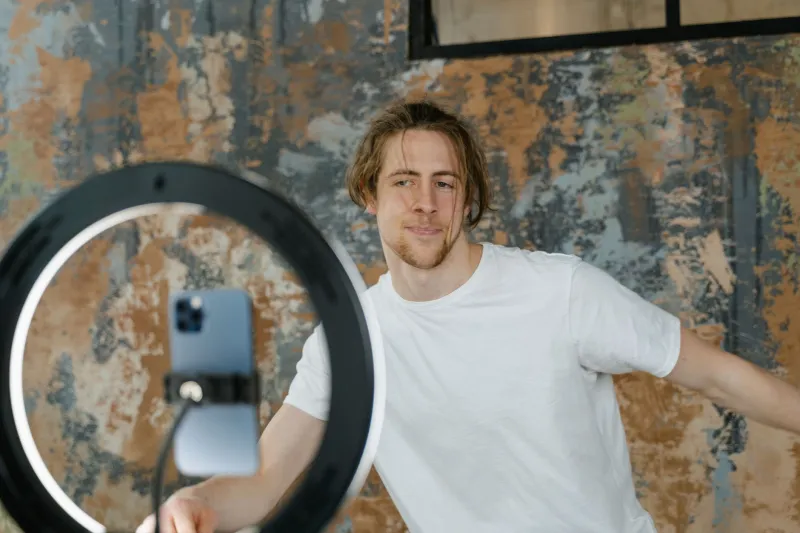
Some creators will become real actors. Some will find a niche that suits them perfectly without ever quite cracking traditional performance. And some will head back to their ring lights and their comment sections, having learned that the camera that faces you directly is very different from the one that asks you to pretend it isn't there.
Hollywood has always been a place where people come to reinvent themselves. The only new thing is that now they arrive with the receipts already in hand.