When Everything Is Must-Watch, Nothing Is: The Slow Collapse of Prestige TV's Golden Promise
There was a moment — somewhere around the time Breaking Bad wrapped up and True Detective Season 1 had everyone losing their minds at the water cooler — when prestige television felt genuinely electric. Watching the right show wasn't just entertainment. It was a cultural event. You either kept up or got left out of the conversation entirely.
That feeling? It's getting harder and harder to find.
Not because the shows have gotten worse, necessarily. If anything, the technical craft behind today's dramas is more polished than ever. The problem is that there are just so many of them now, all competing for the same emotional real estate in your brain, that the whole concept of "must-watch TV" has started to feel a little hollow.
How We Got Here
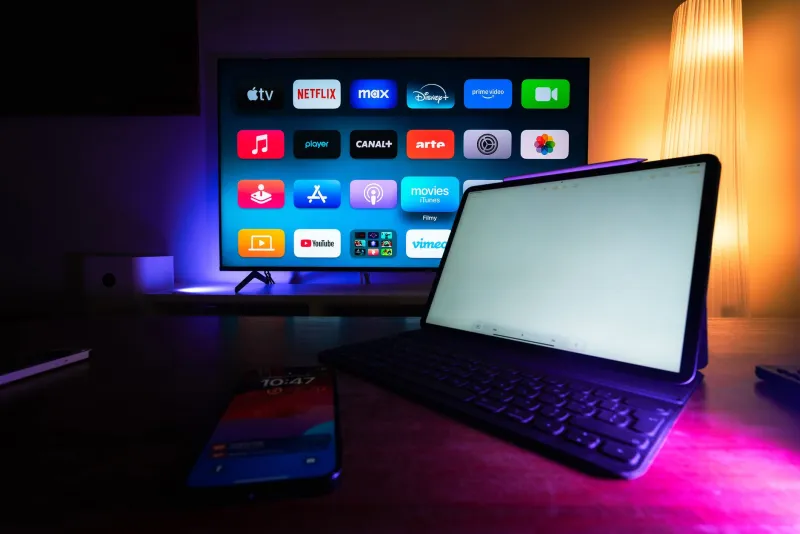
Blame Netflix — or credit them, depending on how you look at it. When the streamer started pouring money into original programming around 2013, it kicked off an arms race that nobody has really won. HBO, Amazon, Hulu, Apple TV+, Peacock, Paramount+, Max — every platform decided that prestige drama was its golden ticket to subscriber loyalty.
The logic made sense at the time. Game of Thrones was basically a religion. The Sopranos had rewritten what TV could be. If you could manufacture that kind of cultural gravity, you'd have people locked into your subscription for years.
So they all tried. Simultaneously. Constantly.
The result? By some estimates, there were over 600 scripted series airing in the US in a single year at the height of so-called "Peak TV." That number has dipped slightly as the industry tightens its belt, but we're still operating in an environment where a genuinely excellent drama can premiere, earn critical raves, and quietly vanish from the cultural conversation within two weeks because something else showed up to replace it.
The Paradox of Too Much Good TV
Here's the uncomfortable truth that nobody in the industry really wants to say out loud: oversaturation doesn't just exhaust audiences — it actively erodes the impact of individual shows.
Think about how Succession ended. It was a landmark moment for prestige television, a genuinely great series wrapping up on its own terms. People talked about it. But compare the cultural footprint of that finale to the Breaking Bad finale a decade earlier. The difference is stark. Not because Succession was lesser — it wasn't — but because the media landscape had simply become too fragmented and too loud for any single show to dominate the way it once could.
Audiences are also dealing with a very real psychological phenomenon: decision fatigue. When every platform is screaming that its new drama is the one you absolutely cannot miss, the brain eventually just... tunes it out. Instead of urgency, you feel paralysis. The watchlist grows. The guilt compounds. And more often than not, you rewatch The Office for the fourth time instead.
Networks Are Feeling It Too
From a business standpoint, the prestige TV bubble has created some genuinely messy economics. Producing a prestige drama is expensive — we're talking tens of millions of dollars per episode for the big-ticket stuff. The bet is that a breakout hit justifies the spend by driving subscriptions and cultural buzz.
But when every competitor is making the same bet with similarly high production values, the math stops working as cleanly. A show can be objectively excellent and still fail to generate the subscriber bump that justifies its budget. That's part of why we've seen so many abrupt cancellations in recent years — shows with devoted fanbases getting axed not because they were bad, but because they didn't move the needle enough in a brutally crowded field.
The platforms have started to respond in different ways. Some are leaning harder into event TV — the The Last of Us model, where you adapt something with a built-in fanbase and guarantee at least an initial wave of attention. Others are experimenting with release strategies, dropping episodes weekly instead of all at once to stretch out the cultural conversation. A few are quietly scaling back their drama output in favor of cheaper reality and unscripted content that delivers reliable engagement without the nine-figure price tag.
What Happens to Storytelling When Noise Wins?
There's a creative cost to all of this that deserves more attention than it usually gets.
When shows are fighting so hard just to be noticed, there's a creeping pressure to be louder, more shocking, more immediately hook-y. Slow-burn storytelling — the kind that made The Wire a masterpiece that took years for mainstream audiences to fully appreciate — is a harder sell in an environment where you have roughly one episode to grab someone before they bounce to the next thing on their list.
Some showrunners are pushing back against this. There's a quiet argument happening in writers' rooms across Hollywood about whether prestige TV has started eating itself — whether the relentless pursuit of "cinematic" television has produced a generation of shows that look stunning and feel emotionally inert because they're more concerned with being taken seriously than with being genuinely felt.
Not every drama needs to be the next Game of Thrones. Some of the most resonant television of the last few years has come from smaller, stranger, harder-to-categorize shows that didn't announce themselves as prestige events and were better for it.
Is There a Way Out?
The honest answer is: probably yes, but it's going to be messy.
The streaming industry is already contracting in ways that would have seemed unthinkable five years ago. Mergers, layoffs, content purges — the gold rush mentality is fading, and what replaces it will likely be a more selective, more deliberate approach to what gets greenlit.
That could actually be good news for prestige drama in the long run. Scarcity creates value. When every platform was flooding the zone with "important" television, the category lost its meaning. A world where fewer prestige dramas get made — but the ones that do get the space and attention they need to actually land — might produce television that hits harder and sticks longer.
Or we might just end up with prestige reality TV and call it a day. Honestly, at this point, who knows.
What's clear is that the era of assuming a well-made drama will automatically become a cultural touchstone is over. The audience is out there, still hungry for great storytelling. They're just buried under a pile of things they meant to watch and haven't gotten around to yet.
Sound familiar?