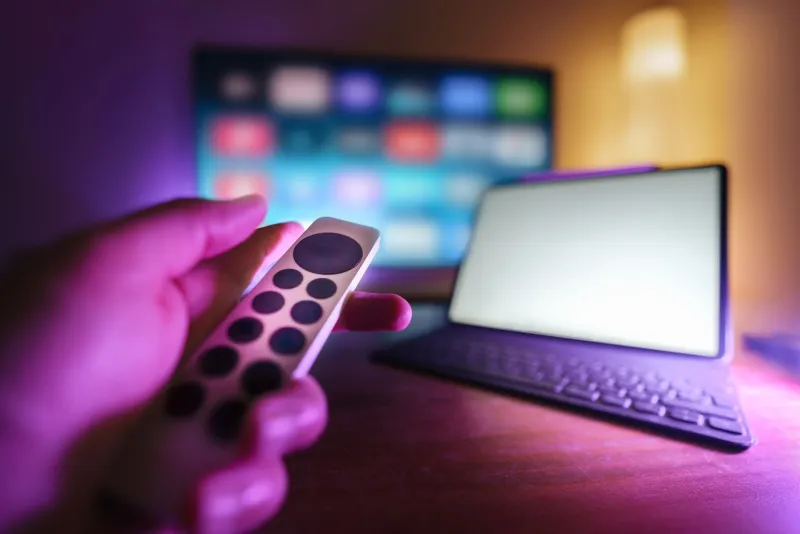
Your Streaming App Has Already Decided What You're Watching Tonight

You tell your coworkers you spent the weekend catching up on that acclaimed documentary series everyone's been buzzing about. What you actually did was spend four hours deep in a reality dating show you would never, ever recommend to another human being. And here's the creepy part: your streaming service already knew that's exactly what was going to happen.
The algorithm didn't judge you. It just quietly added three more shows like it to your homepage.
The Gap Between Who We Say We Are and What We Actually Watch
There's a well-documented psychological phenomenon sometimes called the "social desirability bias" — the tendency to present a version of ourselves to the world that looks better than the full, unfiltered reality. We do it with food, with exercise, with politics. And we absolutely do it with what we watch on TV.
Streaming platforms, though, don't care about the version of you that shows up to brunch. They only see what you actually click on at 11 PM when the lights are low and nobody's looking over your shoulder.
"The data doesn't lie the way people do," says one data scientist who works on recommendation systems at a major streaming company and asked to remain anonymous. "We're not tracking what users say they want. We're tracking what they watch, how long they watch it, when they pause, when they rewind. That behavioral data tells a completely different story than any survey ever would."
The result is a recommendation engine that has, in many ways, become the most honest portrait of who you actually are — not who you aspire to be.
How These Systems Actually Work (Without Getting Too Nerdy)
At a basic level, streaming recommendation engines operate on a mix of collaborative filtering — grouping you with users who have similar watch histories — and content-based analysis, which looks at the specific attributes of shows you've engaged with. But modern systems have gotten significantly more sophisticated than that.
Platforms are now factoring in things like the time of day you're watching, what device you're using, whether you finished an episode or bailed after twelve minutes, and even how quickly you started the next episode after finishing one. They're building a behavioral fingerprint that's more detailed than most people realize.
"What's fascinating is that the system often identifies taste clusters that don't map neatly onto genre labels," explains a researcher who studies media consumption behavior. "Someone might watch prestige dramas publicly but have a strong private appetite for paranormal reality TV. The algorithm sees both, and it starts to understand that those two things can coexist in the same person — even if that person would never put them in the same sentence."
In other words, the machine has figured out that you contain multitudes. Your friends might not have.
The Strange Intimacy of Being Understood by a Machine
There's something genuinely weird about the emotional experience of opening a streaming app and seeing a recommendation that feels almost too accurate. Like it read your mood. Like it somehow knew you needed something completely brainless after the week you just had.
Psychologists who study human-technology interaction have started paying closer attention to this dynamic. "We're wired to feel connection when we feel understood," says one clinical psychologist based in Chicago who works with clients on digital behavior. "When an algorithm nails a recommendation — especially for something you'd be embarrassed to admit you wanted — there's a moment of recognition that can feel almost intimate. Which is strange, because there's no one on the other end of that relationship."
That strangeness is part of what makes it unsettling for a lot of people. The comfort of being seen collides with the discomfort of being seen by something that doesn't actually see you at all — just the data trail you leave behind.
Regular viewers are pretty candid about this tension when you ask them. "I recommended a show to my best friend and she laughed at me because she never would have guessed I was into that kind of thing," said one viewer in her early thirties from Austin, Texas. "But Netflix had already recommended three similar shows to me. Somehow Netflix knows me better than she does. That's a little bit sad and a little bit convenient."
The Guilty Pleasure Is Kind of the Point
Here's an angle that doesn't get discussed enough: streaming platforms have a vested interest in finding your guilty pleasures, because guilty pleasures are incredibly sticky content.
Shows that people feel slightly embarrassed about tend to generate exactly the kind of binge-watching behavior that streaming services love. You're not going to put on a prestige drama and let it run in the background while you do laundry. But a trashy, dramatic reality competition? That plays itself. You don't need to pay full attention. It's comfort food for your eyeballs, and comfort food is the kind of thing you come back to again and again.
"The algorithm isn't just learning your tastes — it's learning your vulnerabilities," the data scientist says. "Not in a malicious way, but in a very practical business sense. The content that keeps you on the platform longest is often the content you'd be least proud of watching. So of course the system gets good at surfacing it."
Which raises a question worth sitting with: is the recommendation engine revealing who you really are, or is it actively shaping who you're becoming as a viewer?
What Happens to Taste When the Machine Is Always Right
There's a reasonable concern buried in all of this. If your streaming app is constantly serving you a hyper-personalized feed built around your most private preferences, does that make you a more honest version of yourself — or does it just keep you comfortable in a loop of the same emotional experience over and over?
Some media critics have started arguing that algorithmic recommendation, despite its accuracy, might actually be narrowing the range of things we're willing to try. When the system is always right, there's less reason to take a chance on something unfamiliar. The happy accident of stumbling onto a show you never would have picked gets engineered out of the experience.
"There's a version of this where we all end up in incredibly personalized, incredibly comfortable, incredibly small viewing worlds," says the media behavior researcher. "The algorithm knows your guilty pleasures, sure. But does it know what you haven't discovered yet?"
That's the part the data can't answer. Not yet, anyway.
You Already Know What You're Watching Tonight
The next time you open your streaming app and find something waiting for you that you didn't know you wanted but absolutely do — take a second to appreciate how strange that is. A system built from your own behavioral exhaust, running quietly in the background, has mapped the distance between your public taste and your private one and decided to meet you exactly where you actually are.
Your friends think you're watching something impressive. The algorithm knows the truth. And honestly? It's not telling anyone.