That Streaming Service Knows You Better Than Your Therapist Does
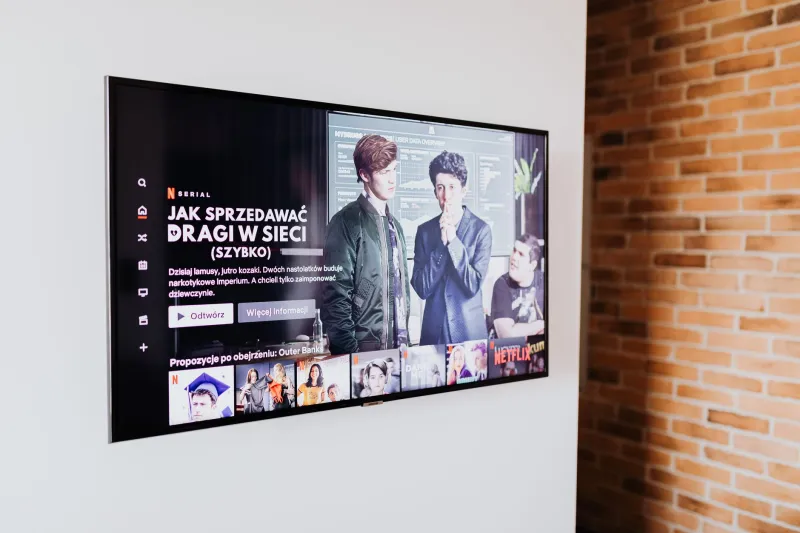
You open Netflix on a Tuesday night, vaguely restless, not quite sure what you're in the mood for. Within seconds, a row of thumbnails appears — and somehow, almost annoyingly, one of them is exactly what you wanted. You didn't know you wanted it. But the algorithm did.
That's not magic. It's math. And it's been studying you for a long time.
More Than Just What You Watch
Most people assume streaming recommendations are based on viewing history. Watch a lot of crime dramas, get more crime dramas. Simple enough. But the actual machinery running underneath your homepage is considerably more invasive — and more sophisticated — than that.
Platforms like Netflix, Hulu, and Max track far more than your completed titles. They log how long you hover over a thumbnail before clicking. They record exactly where you paused, rewound, or fast-forwarded. They note whether you finished a show in one sitting or abandoned it after episode two. They clock what time of day you're watching, what device you're on, and whether you turned on subtitles. Netflix has publicly acknowledged tracking over 250 data signals per user. That number is almost certainly higher now.
What emerges from all that data isn't just a list of genres you like. It's a behavioral fingerprint — a profile that can predict your emotional state on a given evening, your tolerance for slow-burn storytelling versus instant gratification, even your likelihood of churning off the platform if they don't surface the right title soon enough.
Think about that last one. The algorithm isn't just trying to make you happy tonight. It's trying to keep your credit card on file next month.
The Thumbnail That Was Made for You
Here's something that unsettles people when they first hear it: the cover image you see for a show might not be the same one your neighbor sees. Streaming platforms A/B test thumbnails constantly, and they serve personalized artwork based on your viewing history.
If you watch a lot of content featuring strong female leads, the platform may show you a thumbnail that foregrounds a woman character — even if that character isn't the main focus of the story. If your history skews toward comedy, you might see a lighter, more playful image of the same title. You and your roommate could be looking at completely different versions of the same show's cover art and never know it.
It sounds like a minor detail. It isn't. It's the platform shaping your perception of content before you've watched a single frame — nudging you toward a decision it has already calculated you're likely to make.
The Comfort Trap
Here's where things get philosophically thorny. Personalization, in theory, sounds great. Nobody wants to wade through content they hate to find something they love. Discovery should be easier, not harder.
But there's a growing argument — backed by both media critics and behavioral researchers — that hyper-personalized recommendations don't actually expand your taste. They reinforce it. You get served more of what you've already engaged with, which means you're less likely to stumble onto something genuinely surprising, challenging, or outside your comfort zone.
Remember when you used to flip through cable channels and land on something random that you ended up loving? That accidental discovery is largely gone now. The algorithm has replaced serendipity with precision, and precision, it turns out, has a ceiling.
There's even a term for it in media studies: the filter bubble. Your streaming experience becomes a mirror of your existing preferences rather than a window into something new. And because the mirror is so flattering — so eerily accurate — most people don't notice the walls closing in.
When Being "Known" Feels a Little Too Personal
There's a specific psychological discomfort that comes with algorithmic accuracy, and it's worth naming. When a platform recommends something that feels weirdly, specifically right — not just in genre but in tone, in mood, in exactly the kind of emotional release you needed tonight — it can feel less like helpful technology and more like surveillance.
And in a sense, it is. You consented to it somewhere in a terms-of-service agreement you didn't read, but that doesn't make the feeling less strange. Being understood by a machine, without ever having articulated what you wanted, touches something uncomfortable in how we think about privacy and self-knowledge.
Psychologists who study human-computer interaction have noted that users often report feeling a mix of appreciation and unease when algorithms perform well. The appreciation is obvious. The unease is subtler — it has to do with the implied message that your inner life is legible, predictable, and reducible to data points. That you are, in some sense, a pattern.
Most of us prefer to think of ourselves as more complicated than that.
The Business Logic Behind the Curtain
It's worth being clear about something: streaming platforms are not building these profiles out of curiosity or a genuine desire to enrich your cultural life. They're building them because subscriber retention is an existential metric. Churn — the rate at which users cancel — is the number every streaming executive loses sleep over.
A recommendation engine that keeps you watching 20 minutes longer per session translates directly to reduced cancellation rates. A platform that can predict you're about to cancel and surface exactly the right title to change your mind is worth billions in retained revenue. Your taste profile isn't a gift the platform gives you. It's an asset the platform owns.
That's not cynical, exactly — it's just honest. Understanding the incentive structure helps clarify why personalization is optimized for engagement over genuine discovery. The goal was never to broaden your horizons. The goal was to keep you on the couch.
So What Do You Actually Do With This?
Knowing all this doesn't mean you need to throw your Roku out the window. But a little intentional friction might not be a bad thing. Use the search bar instead of the homepage sometimes. Ask a friend what they've been watching. Follow a critic whose taste you trust. Browse a category you've never clicked on.
The algorithm is very good at its job. But its job and your actual interests aren't always the same thing. Occasionally making your own choices — even imperfect, random ones — is how you remind yourself that you're a person, not a profile.
And honestly? Some of the best things you'll ever watch are the ones no machine would have predicted you'd love.