Your Show Didn't Go Anywhere — The Rights Did
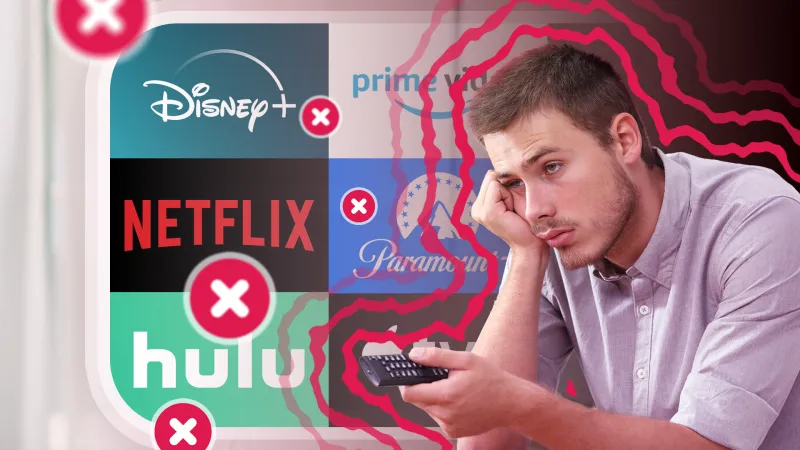
Photo: person frustrated searching multiple streaming apps on TV remote, via static0.anpoimages.com
You settle in on a Friday night, ready to finally finish that show everyone's been talking about. You open the app. You scroll. You search. Nothing. You try a different app. Still nothing. Then, after a solid ten minutes of digital archaeology, you find it — on a service you canceled eight months ago because you were trying to cut back. Congratulations. You've officially become a casualty of the entertainment industry's least-discussed war.
This isn't about bad taste or bad luck. It's about licensing — a behind-the-scenes corporate chess match that has quietly turned watching television into a part-time job.
The Invisible Hand Moving Your Watchlist
Here's the thing most casual viewers don't realize: the streaming platform you're watching a show on doesn't always own that show. In a lot of cases, they've licensed it — basically rented the rights to stream it for a set period of time. When that contract expires, the show can move, disappear, or get locked into a bidding war between competing platforms.
It sounds dry and corporate because it is. But the real-world effect on viewers is anything but boring. Shows like Friends, The Office, and Schitt's Creek have all played this game at various points, bouncing between platforms or getting pulled entirely as their parent companies decided to consolidate content on their own services. NBC yanked The Office from Netflix to anchor Peacock. WarnerMedia did the same with Friends, pulling it over to Max. These weren't random decisions — they were calculated moves in a war for subscriber attention.
And you, the person who just wanted to rewatch "Threat Level Midnight," got caught in the crossfire.
When a Show Gets Split Down the Middle
Sometimes it's not even a full migration. Sometimes — and this is where things get genuinely maddening — a show gets split across platforms. Earlier seasons live on one service, later seasons on another. You want the whole run? Better subscribe to both. Better yet, subscribe to both and hope neither contract expires before you finish.
This fragmentation isn't accidental. It's the direct result of deals that were signed years, sometimes decades, before streaming was even a real concept. A studio sold syndication rights in one era, streaming rights in another, and now different companies own different chunks of the same show's history. Nobody sat down and designed a system meant to frustrate fans — but that's exactly what they built anyway.
Anime fans know this pain especially well. A beloved series might have its first two seasons on Crunchyroll, a filler arc on Funimation (now folded into Crunchyroll, but not always cleanly), and a movie that's technically available but only through a rental on a completely separate platform. Following a long-running series has started to feel less like entertainment and more like filing taxes.
The Fandom Fracture Nobody Talks About
There's a social cost here that gets overlooked in most coverage of the streaming wars. When a show scatters across platforms, its fanbase scatters with it. Not everyone follows. Some people don't want to pay for another subscription. Some don't even know the show moved. The result is a fandom that slowly loses its cohesion — the shared cultural moment gets replaced by a fragmented experience where half the audience is three seasons behind because they're waiting for the show to come back somewhere affordable.
Think about how much of pop culture conversation depends on people being roughly in the same place with a story. The water cooler moment, the live-tweet thread, the group chat meltdown after a season finale — all of that requires a shared access point. When a show hops platforms or disappears into a licensing limbo, that shared space evaporates. The conversation doesn't die all at once. It just quietly thins out until nobody's really talking anymore.
That's not great for fans. It's also, ironically, not great for the studios and platforms doing the moving. A disengaged audience is a churning audience.
The Subscriber Math Nobody Wins
Streaming platforms justify these licensing maneuvers as smart business. Pull your content back to your own service, force subscribers to come to you, build loyalty to your platform rather than to a competitor. In theory, it makes sense. In practice, the math gets messier.
Research has consistently shown that subscription fatigue is real and growing. The average American household is paying for more streaming services than ever before, and the tolerance for adding yet another one is shrinking fast. When a platform pulls a beloved show back from a competitor and puts it behind their own paywall, they're betting that enough fans will follow to justify the move. Sometimes that bet pays off. Sometimes it just accelerates cancellations on both ends.
There's also the piracy question that nobody in the industry likes to say out loud. When content becomes genuinely hard to access through legitimate means — when it's not on any service you currently subscribe to and renting it costs as much as a month of a new subscription — some portion of the audience is going to find it another way. The licensing wars didn't create piracy, but they've done a pretty solid job of keeping it relevant.
So What Actually Happens to the Shows You Love?
The honest answer is: it depends, and that's the problem. Some shows find stable homes and stay put long enough for audiences to trust them. Others bounce around until the licensing agreements dry up and they effectively vanish from legal streaming entirely — not canceled, not concluded, just... gone. Available on DVD, maybe. Findable through a digital purchase, technically. But not on the kind of frictionless platform where most people actually watch things now.
There's also a growing category of shows that exist in a kind of permanent uncertainty — renewed, then moved, then renewed again on the new platform, building an audience that's always slightly unsure whether their investment is going to pay off. Fans of these shows develop a particular kind of low-grade anxiety. They love the series, but they've learned not to get too comfortable.
The Part Where We Don't Have a Great Solution
Here's the uncomfortable truth: there's no clean fix coming. The licensing structure that created this mess is deeply embedded in how entertainment rights work, and the major players all have financial incentives to keep their content siloed. Calls for some kind of universal streaming platform or content-sharing agreement sound nice but run directly into antitrust concerns, competitive self-interest, and the fundamental reality that these companies are spending billions to differentiate themselves.
What might actually help — even a little — is more transparency. Clearer expiration notices. Better tools for tracking where a show currently lives. Some platforms have started adding "leaving soon" labels to content, which is genuinely useful even if it's also a little depressing.
Until something changes structurally, the best advice is also the most annoying: stay flexible, keep a list of what you're watching and where, and maybe don't cancel that subscription until you've actually finished the show. The licensing wars aren't going anywhere. Neither, unfortunately, is the headache.