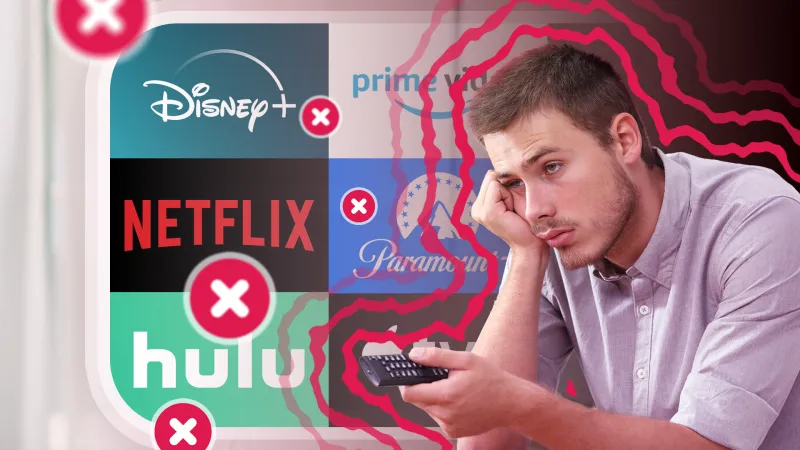
Counting Ghosts: How Streaming Platforms Invented Their Own Rules for Winning

Photo: Intel Free Press, CC BY 2.0, via Wikimedia Commons
Sometime in the last decade, the entertainment industry quietly pulled off one of its greatest tricks. It convinced us that success still meant something measurable — that when Netflix or Hulu or Max told us a show was a runaway hit, there was a real number behind that claim. A hard count. Something you could point to.
There isn't. Or at least, not the kind you'd recognize.
The way streaming platforms define, report, and celebrate viewership has almost nothing in common with how traditional television tracked audiences for the better part of sixty years. And that gap — between what these platforms say and what's actually happening — is a lot wider than most people realize.
The Nielsen Era and Why It Actually Made Sense
For decades, TV ratings were imperfect but at least consistent. Nielsen Media Research tracked live viewership through a combination of set-top meters and viewer diaries, and while the methodology had plenty of critics, it gave everyone in the industry a shared language. A show that pulled 10 million viewers on a Tuesday night meant something specific. Advertisers knew what they were buying. Networks knew what they were keeping.
More importantly, the public knew. If a show was pulling 3 million viewers when it needed 8 million to survive, that was information you could find. Entertainment journalists could report it. Fans could see the writing on the wall.
Streaming broke all of that. And not by accident.
The Art of the Vague Announcement
Pay attention the next time a major streaming platform celebrates a show's performance. The language is almost always carefully constructed to sound impressive without actually committing to anything.
"X million households chose to watch" sounds like a viewership number. It isn't, really. "Chose to watch" can mean anything from watching an entire season to pressing play on the first episode and abandoning it after seven minutes. Netflix, for a stretch, literally counted a "view" as any account that streamed at least two minutes of a title. Two minutes. That's not watching a show. That's accidentally clicking on it while you were looking for something else.
Hulu has used different thresholds. Disney+ has reported differently still. There is no universal standard, no regulatory body enforcing consistency, and — crucially — no obligation for any of these companies to share their full methodology with the public. They announce what they want, when they want, framed however makes the story look best.
And when a show underperforms? The silence is deafening. You'll notice that streaming platforms only hold press releases when the numbers are good. Bad numbers simply don't exist in their public communications.
What Would Actually Kill a Network Show
Here's where things get genuinely strange. Several streaming originals have been celebrated as cultural phenomena with viewership figures that, if applied to a traditional broadcast network, would have resulted in immediate cancellation.
Broadcast television still operates in a world where 18-49 demo ratings below a certain threshold trigger panic. A drama pulling a 0.4 in the demo on CBS is already living on borrowed time. A comedy at 0.3 is basically writing its own obituary.
Meanwhile, streaming platforms have announced shows as "record-breaking successes" based on metrics that conveniently exclude demographic breakdowns, geographic limitations, and completion rates. A show can be watched by 40 million accounts globally — across wildly different markets with different cultural contexts and viewing habits — and get packaged as a domestic triumph.
The comparison isn't apples to oranges. It's apples to furniture.
Why Platforms Have Every Incentive to Stay Opaque
This isn't incompetence. It's strategy.
When Netflix went public and became accountable to shareholders, subscriber growth became the north star. For years, the argument to Wall Street was essentially: trust us, the content is working, people are staying subscribed. Releasing granular viewership data would have invited scrutiny that didn't serve that narrative. If show A is pulling massive numbers and show B is a ghost town, that creates uncomfortable questions about resource allocation, creative decisions, and whether the platform actually knows what it's doing.
Obscuring the data keeps everyone in a permanent state of uncertainty — which, paradoxically, is useful. Showrunners can't leverage hit status in contract negotiations if the definition of "hit" is controlled entirely by the platform. Actors can't point to specific performance numbers when asking for raises. Critics can't definitively call something a failure when the platform can always produce a metric that says otherwise.
The ambiguity isn't a bug. It's a feature that consolidates power upward.
The Slow Push for Transparency
There's been some movement on this front, mostly driven by external pressure. Nielsen launched its own streaming measurement service, tracking viewership across platforms through its existing panel infrastructure. The data it's released has occasionally told very different stories than what the platforms themselves announced — and the platforms have not always been thrilled about it.
The Writers Guild of America, during its 2023 strike, made streaming transparency a central demand. Writers argued — correctly — that residual payments tied to viewership data were being calculated using numbers they had no way to verify or challenge. It was the equivalent of your employer saying "trust us, the bonus formula is working in your favor" while refusing to show you the spreadsheet.
Some incremental disclosures have followed. Netflix began publishing a weekly top-ten list with hours-viewed figures, which is more than it used to offer. But hours viewed still doesn't tell you how many unique people watched, whether they finished, or what the demographic breakdown looked like. It's progress measured in millimeters.
What You Should Actually Believe
When a platform tells you a show is a hit, here's a reasonable filter to run it through: Are they sharing the metric they're using to define that? Are they comparing it to their own library, or to broader television performance? Are they talking about global numbers or domestic ones? And critically — are they talking about it at all, or did the show quietly disappear after one season with no explanation?
That last one is usually the most honest data point available. Platforms cancel shows they don't believe in, regardless of how the press releases read. If your favorite show got axed with no warning after the platform spent months calling it a success, someone somewhere had numbers that told a different story.
The audience deserves better than this. We've spent years letting entertainment companies redefine what "popular" means in real time, without any accountability, because the content keeps coming and it's easier to just keep watching than to ask hard questions.
But those numbers aren't neutral. They shape what gets made, who gets paid, and which stories get told. The least we can do is stop pretending they mean what we're told they mean.